
The Toxic Truth About Conventional Mosquito Repellents
Why Conventional Mosquito Repellents Are Being Questioned
Conventional mosquito repellents are being questioned because people are paying more attention to harsh chemical exposure in everyday life.For years, mosquito control was treated as simple: spray the yard, fog the patio, cover your body in repellent, and move on. But homeowners are now asking better questions.- What is in this spray?
- Am I breathing it in?
- Is it safe for my dog or cat?
- Can it harm pollinators?
- Does it wash into drains or contaminate water?
- Is there a lower-tox mosquito control option?
- Do I really need toxic chemical spraying around my backyard?
- Avoid spraying in enclosed areas
- Avoid breathing spray products
- Avoid applying over cuts or irritated skin
- Avoid the eyes and mouth
- Follow label directions carefully
Common Chemicals Found in Mosquito Sprays
Many conventional mosquito repellents and backyard mosquito treatments use chemical ingredients from a few major categories such as:DEET
DEET is one of the best-known mosquito repellent ingredients. It is used in many personal sprays, lotions, and wipes. DEET does not usually kill mosquitoes. It helps prevent mosquitoes from detecting or biting the person wearing it.DEET is effective, but it is still a synthetic chemical exposure product. Safety guidance tells users not to:- Spray at or near pets
- Spray in enclosed areas
- Breathe in spray products
- Apply over wounds or irritated skin
- Spray near the eyes or mouth
- Plastics
- Synthetic fabrics
- Eyeglass frames
- Watch crystals
- Leather
- Painted or varnished surfaces
Picaridin and IR3535
Picaridin and IR3535 are also common synthetic repellent ingredients used in conventional mosquito repellent products.They are often marketed as less greasy or less harsh-smelling than DEET.Permethrin
Permethrin is a synthetic pyrethroid insecticide used in clothing treatments, gear treatments, and pest control products.- Cats
- Fish
- Bees
- Other beneficial insects
Pyrethroids Used in Backyard Mosquito Treatments
Many backyard mosquito treatments rely on synthetic pyrethroids, including:
- Bifenthrin
- Permethrin
- Deltamethrin
- Lambda-cyhalothrin
- Cyfluthrin
- Resmethrin
- Sumithrin
These chemicals are commonly used in yard sprays, foggers, barrier treatments, and mosquito control applications.
Pyrethroids work by interfering with nerve signaling in insects. That is why they are effective. But their broad insect toxicity is also why they can affect non-target organisms when sprayed across outdoor spaces.
Aerosol Mosquito Sprays and Why Application Method Matters
Aerosol mosquito products can create fine airborne droplets during application. The level of exposure depends heavily on the product being used, the ingredients involved, the size of the treatment area, and whether the application method is controlled and targeted or broad and excessive.
This matters because many homeowners use mosquito aerosols around:
- Covered patios
- Screened porches
- Garages
- Sheds
- Pool areas
- Outdoor kitchens
- Doorways
- Children’s play areas
- Pet spaces
- Outdoor furniture
EPA guidance specifically tells users not to spray repellents in enclosed areas and to avoid breathing spray products.
When a product is sprayed into the air, exposure is not limited to the lungs of the person applying it. Children nearby, pets, guests, and anyone downwind may also breathe small droplets or contact residue.
Aerosols may also contain:
- Propellants
- Solvents
- Fragrance ingredients
- Petroleum distillates
These ingredients help with spray performance but can also contribute to odor, irritation, residue, or inhalation concerns.
Not All Mosquito Misting Systems Are the Same
Modern mosquito control systems vary significantly in both technology and chemical approach.
Some conventional mosquito fogging methods rely on heavy broadcast spraying, broad-spectrum pyrethroids, or large toxic chemical clouds designed to blanket outdoor areas. These approaches can increase unnecessary exposure if used improperly.
Newer mosquito misting systems are becoming more intentional. A controlled mosquito misting system with intentional timing, targeted placement, and lower-tox formulations is very different from excessive aerosol or repeated harsh chemical spraying.
Potential Health Concerns With Conventional Chemical Mosquito Repellents
The health concerns around conventional mosquito repellents depend on:
- Product type
- Concentration
- Exposure route
- Frequency of use
Common risk factors include:
- Overapplication
- Spraying near the face
- Breathing aerosol mist
- Using products in enclosed areas
- Spraying near food
- Applying to irritated skin or cuts
- Using adult products on children incorrectly
- Layering multiple chemical products
- Letting pets onto treated areas too soon
- Using outdoor products indoors
- Using dog pesticide products around cats
DEET is widely used and effective when used correctly, but NPIC notes that adverse responses have been reported, often involving improper use or accidents.
Pyrethroid toxicity is also a known topic in toxicology literature. StatPearls describes pyrethroids as synthetic compounds related to natural pyrethrins and notes that they may present toxicity risks depending on exposure.
Children and Mosquito Spray Exposure
Children are more vulnerable to pesticide exposure because they are smaller, closer to the ground, and more likely to touch surfaces.
EPA recommends precautions such as:
- Not allowing young children to apply repellents themselves
- Not applying repellents to children’s hands
- Applying spray to adult hands first before applying to a child’s face
With yard treatments, exposure may occur through:
- Grass
- Patio surfaces
- Toys
- Shoes
- Pet fur
- Outdoor furniture
Residue does not disappear instantly after application, which is why timing and method matter.
Pets and Conventional Mosquito Treatments
Pets often have much more direct contact with treated outdoor areas than people do.
Dogs and cats may be exposed through:
- Treated grass
- Sprayed patio furniture
- Outdoor bedding
- Water and food bowls
- Chemical drift
- Grooming fur contaminated by residue
- Paw licking after walking on treated surfaces
Environmental Concerns: Pollinators, Beneficial Insects, and Water
Backyard mosquito treatments can affect more than mosquitoes.
Many pyrethroid-based products are broad-spectrum insecticides that may impact beneficial insects if exposure occurs.
Permethrin is one example. It is known to be toxic to bees and aquatic organisms under certain conditions.
Mosquito sprays are often applied near:
- Flower beds
- Vegetable gardens
- Shrubs
- Lawns
- Drainage areas
- Storm drains
- Damp shaded zones
These are also areas where runoff and drift can move chemicals beyond the target zone.
Low Tox Mosquito Control Methods People Are Exploring
Many homeowners are now looking for lower exposure mosquito control strategies such as:
- Removing standing water
- Cleaning gutters regularly
- Emptying plant saucers
- Trimming dense vegetation
- Improving airflow with fans
- Choosing natural formulas without pyrethroids or neonicotinoids
The goal is not to ignore mosquitoes, but to manage them more intelligently.
Where SKEETER WEEPER® Fits In
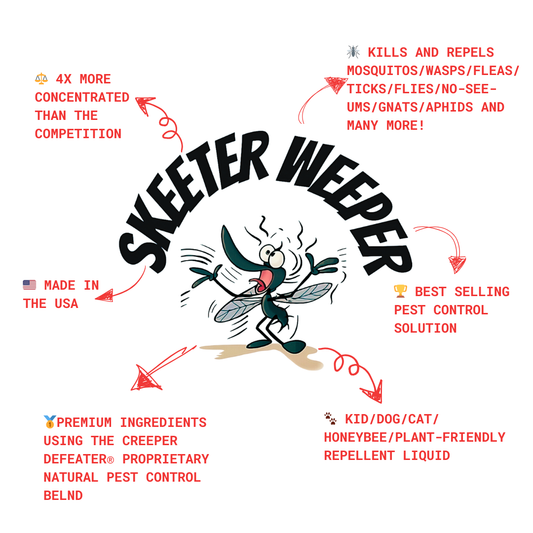
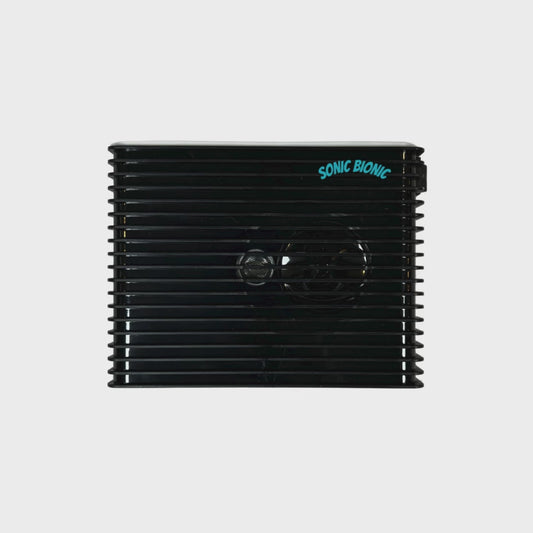
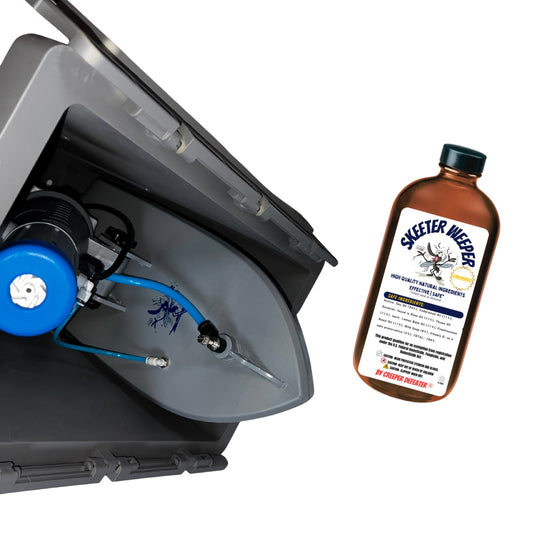
SKEETER WEEPER® was designed for homeowners who want backyard mosquito control without relying on conventional pyrethroid yard sprays, neonicotinoids, or harsh aerosol fogging.
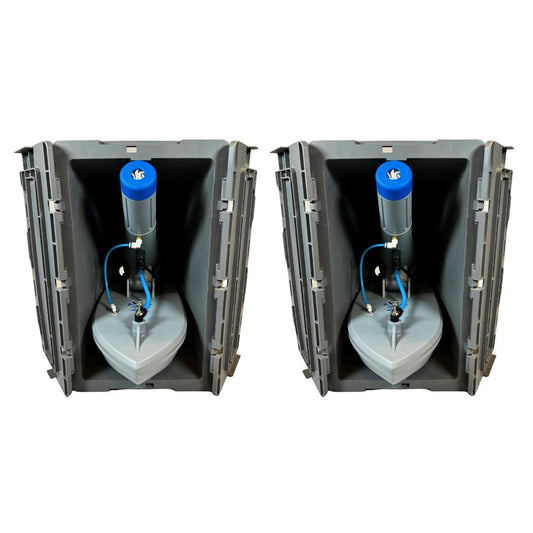
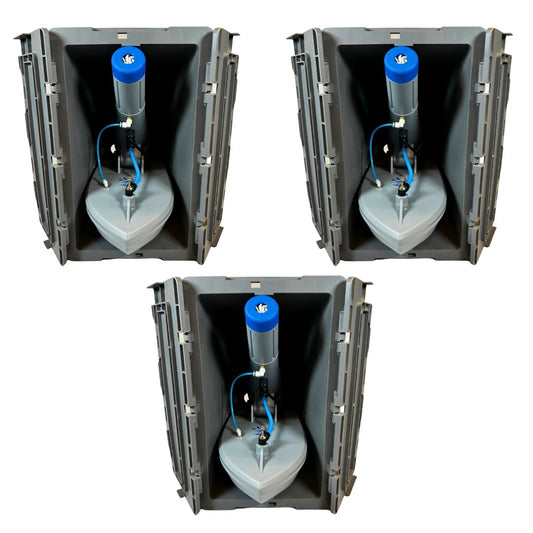
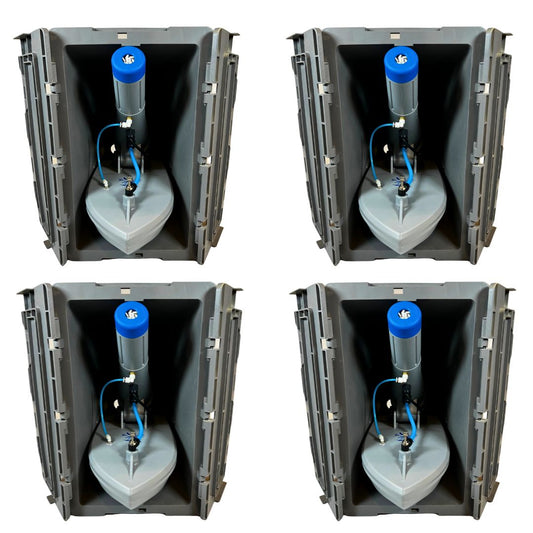
It is a smart, app-controlled mosquito misting system that lets homeowners run short, targeted sessions in outdoor areas where mosquitoes and other pests are active.
Instead of using pressurized aerosol cans or traditional chemical fogging, SKEETER WEEPER® gives homeowners more control over:
- When the system runs
- How long each session lasts
- Where the mist is directed
- How often treatment happens
- Which outdoor zones are targeted
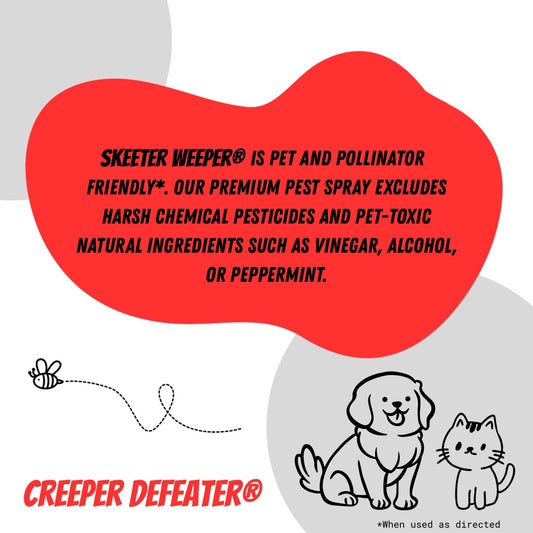
SKEETER WEEPER® excludes harsh chemical pesticides. It does not use pyrethroids. It does not use neonicotinoids. It does not require conventional aerosol fogging cans.
What also sets it apart is what the formula leaves out. Unlike many other natural pest solutions, the SKEETER WEEPER® formula excludes natural ingredients that can be concerning for pets, such as vinegar, alcohol, garlic, peppermint oil, coffee, and citronella oil.
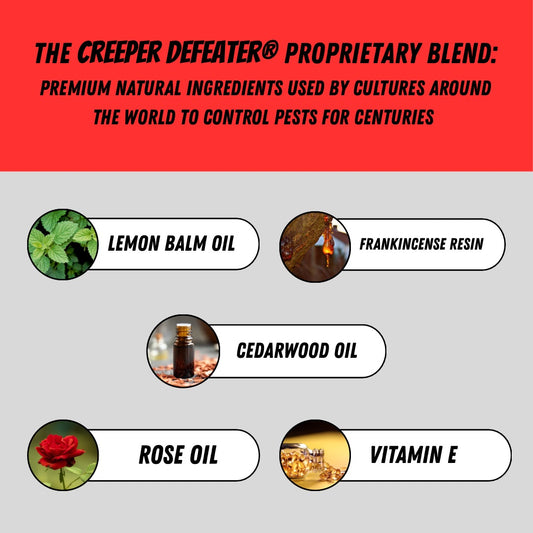
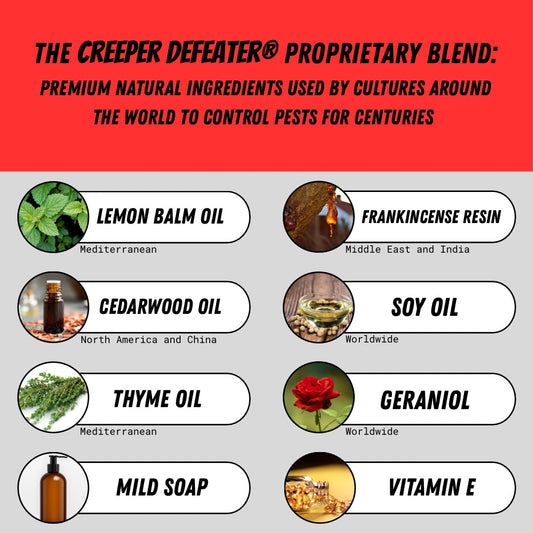
Instead, it uses the CREEPER DEFEATER® proprietary blend of lemon balm, frankincense resin, cedarwood oil, soy oil, thyme oil, geraniol found in rose oil, mild soap, and naturally occurring vitamin E as the only preservative. Ingredients various cultures around the world have used for centuries for pest control- blended into a modern formula with a smart application system.
SKEETER WEEPER® uses a plant-based pesticide formula and is designed for localized backyard use. For homeowners searching for an easy mosquito misting system, non toxic mosquito spray alternative, or low tox mosquito control method, SKEETER WEEPER® offers a smarter approach to backyard mosquito treatment.
References
- U.S. Environmental Protection Agency. “Using Insect Repellents Safely and Effectively.” EPA.
https://www.epa.gov/insect-repellents/using-insect-repellents-safely-and-effectively - National Pesticide Information Center. “DEET General Fact Sheet.” Oregon State University and U.S. EPA.
https://npic.orst.edu/factsheets/DEETgen.html - National Pesticide Information Center. “Permethrin General Fact Sheet.” Oregon State University and U.S. EPA.
https://npic.orst.edu/factsheets/PermGen.html - National Pesticide Information Center. “Pyrethrins and Pyrethroids.” Oregon State University and U.S. EPA.
https://npic.orst.edu/factsheets/pyrethrins.html - Poole, N. D., et al. “Pyrethrin and Pyrethroid Toxicity.” StatPearls, NCBI Bookshelf.
https://www.ncbi.nlm.nih.gov/books/NBK606124/ - U.S. Environmental Protection Agency. “Pyrethroids and Pyrethrins.” EPA.
https://www.epa.gov/ingredients-used-pesticide-products/pyrethroids-and-pyrethrins - Li, Z. M., et al. “An Assessment of Exposure to Several Classes of Pesticides in Pet Dogs and Cats from New York, United States.” Environmental Science & Technology, 2022.
https://pmc.ncbi.nlm.nih.gov/articles/PMC9574881/ - University of Nebraska Extension. “Protecting Your Cats and Dogs from Pesticide Poisoning.” NebGuide G2260.
https://extensionpublications.unl.edu/assets/pdf/g2260.pdf - World Health Organization. “Safety of Pyrethroids for Public Health Use.” WHO.
https://apps.who.int/iris/handle/10665/69008.
![SKEETER WEEPER®: SMART MOSQUITO+ FOGGING / MISTING SYSTEM [PATENT PENDING]](http://creeperdefeater.com/cdn/shop/files/preview_images/Untitled_design.jpg?v=1792615160&width=533)
![SKEETER WEEPER®: SMART MOSQUITO+ FOGGING / MISTING SYSTEM [PATENT PENDING]](http://creeperdefeater.com/cdn/shop/files/SkeeterWeeperProsList-Amazon.jpg?v=1792615629&width=533)