
What’s Actually Driving Pollinator Decline
Pollinator decline is real. It’s also widely misunderstood.
It is not caused by one thing. It is the result of multiple pressures stacking together over time.
The Disappearing Landscape
The most consistent driver across research is habitat loss.
As land is developed across suburban and urban environments, native flowering ecosystems are replaced with uniform lawns and ornamental landscaping. These spaces often look green but offer little to no functional value for pollinators.
An area that once supported dozens of pollinator species can be reduced to a near-zero food environment after conversion to a typical managed yard.
Pollinators rely on continuous bloom cycles. Remove that sequence, even temporarily, and survival rates drop.
Agriculture at Scale
Modern agriculture compounds the issue.
It doesn’t just remove habitat. It replaces it with large-scale monocultures and introduces industrial pesticide use at a level far beyond anything seen in residential settings.
One of the most important distinctions is how certain pesticides behave.
Systemic insecticides, including neonicotinoids, are designed to be absorbed by the plant itself. They move through plant tissues and can be present in pollen and nectar.
That creates a different kind of exposure.
Not a moment. Not a surface.
A continuous pathway.
Across entire fields, over entire seasons.
A Changing Environment
Climate patterns are no longer stable.
Bloom cycles shift. Heat increases. Drought reduces nectar production. Weather patterns change the timing of when pollinators emerge and when plants are available.
When those two fall out of sync, even slightly, it creates a gap. And for pollinators, those gaps matter.
Biological Pressure
Pollinators are also dealing with internal threats.
Parasites like Varroa destructor weaken colonies and spread viruses. In many cases, these pressures alone are enough to collapse entire populations if left unmanaged.
The Real Story: It’s All Connected
No single factor explains pollinator decline.
It’s the interaction:
- Habitat loss
- Industrial agriculture
- Systemic pesticide exposure
- Climate instability
- Disease and parasites
A pollinator weakened in one area becomes more vulnerable in another.
That compounding effect is what drives long-term decline.
Why the Conversation Often Misses the Mark
Discussions around pollinators often focus on isolated actions while overlooking scale. The primary drivers of decline are not small, short-term, localized events. They are large-scale, persistent, and systemic pressures acting across entire regions and ecosystems.
Understanding that distinction is critical. Because without it, the conversation becomes misdirected.
Where Backyard Pest Control Actually Fits
This is where context matters.
Not all pest control operates at the same scale or through the same exposure pathways.
Large-scale agricultural systems:
- Cover thousands of acres
- Introduce systemic chemicals into plant biology
- Create continuous exposure through pollen and nectar
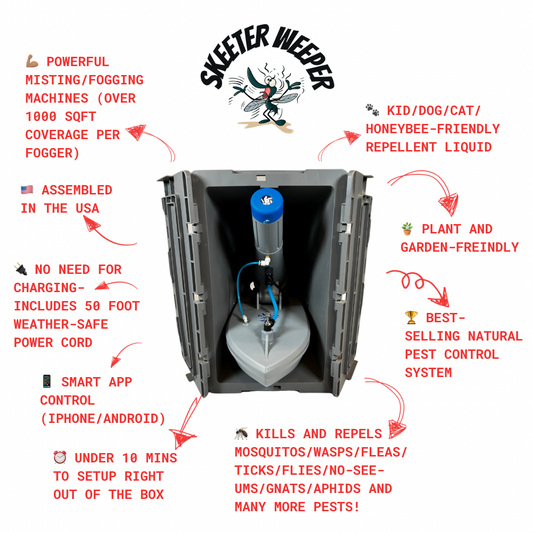
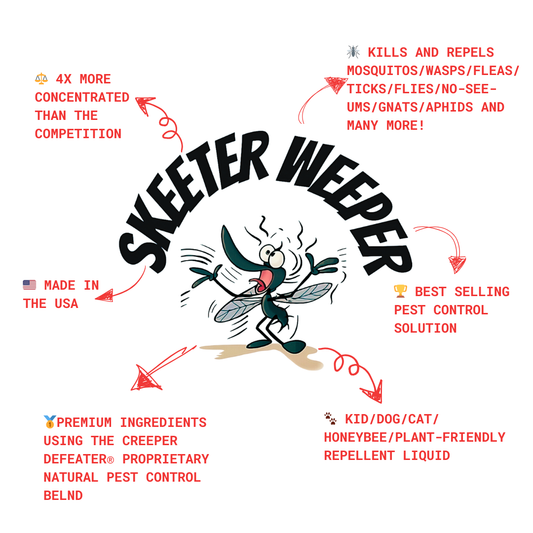
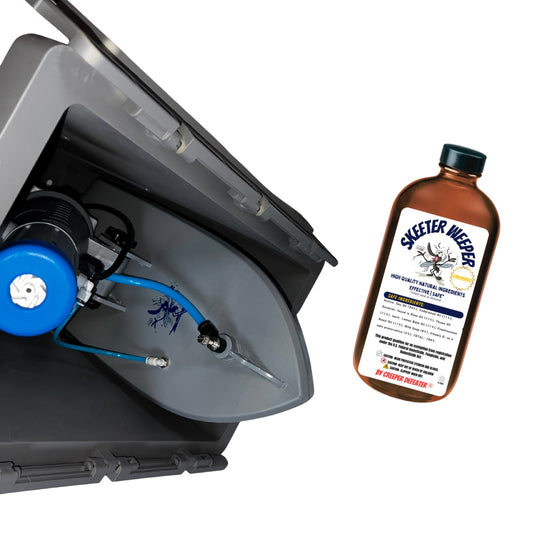
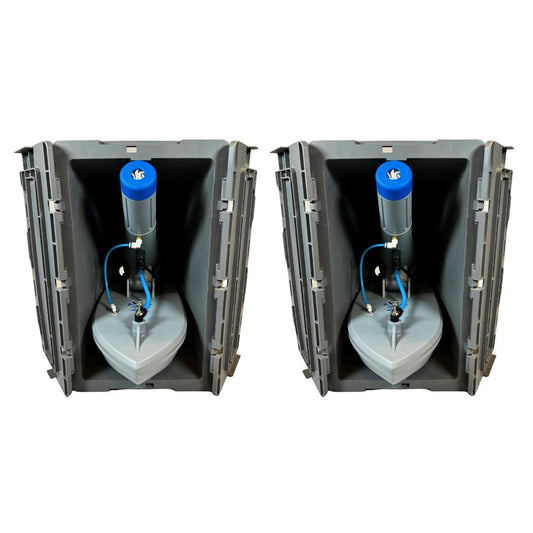
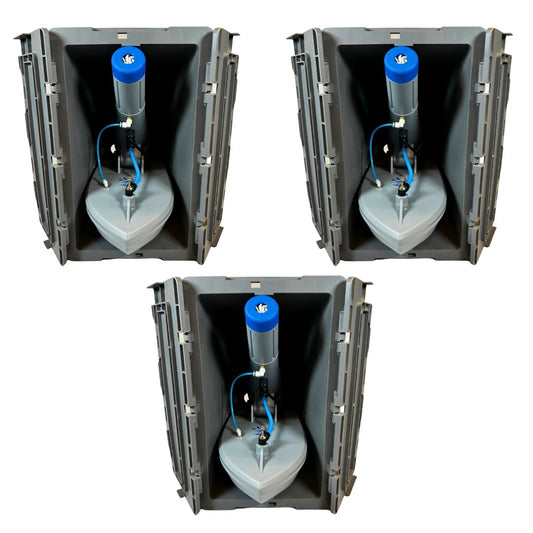
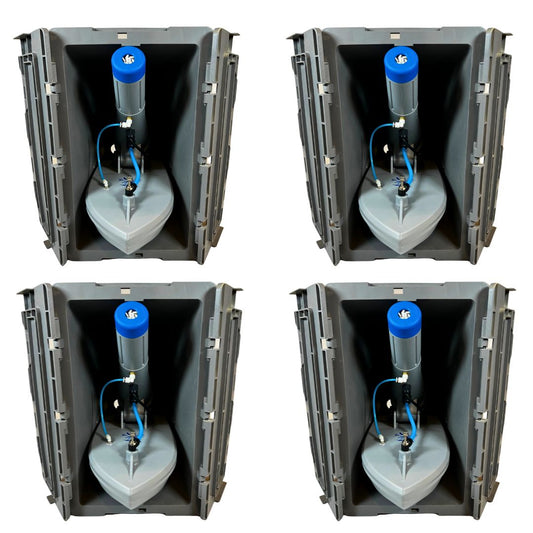
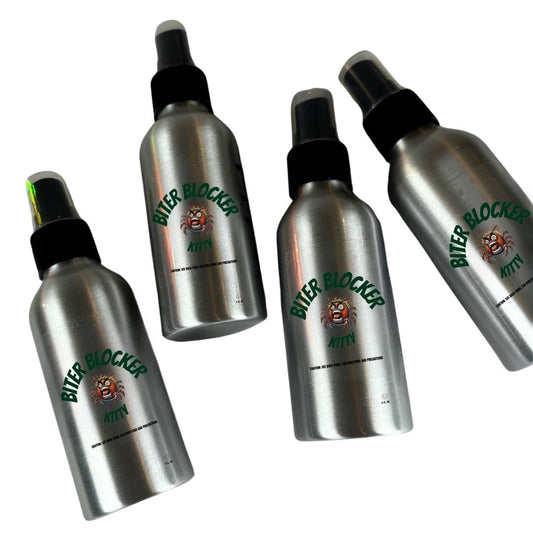
A backyard system like SKEETER WEEPER® operates very differently:
- Operates intermittently rather than continuously
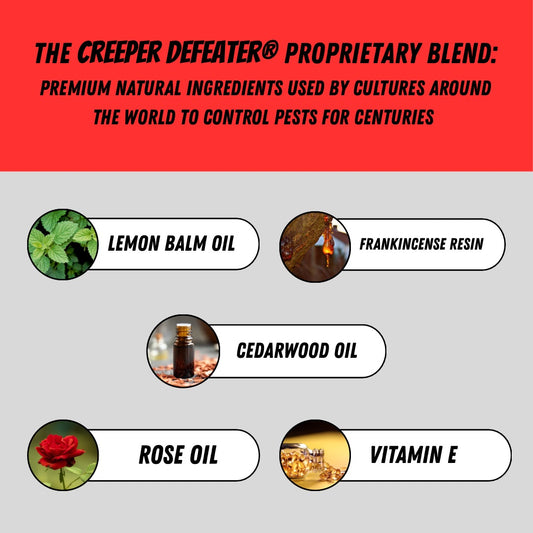
- Uses ingredients classified by the Environmental Protection Agency as Minimum Risk
- Is confined to a localized treatment area, typically 1,000–4,000 square feet
- Does not become incorporated into plant tissue or nectar
- Includes a pollinator protection and responsible use guide
That distinction matters. A field treated with systemic pesticides can expose pollinators continuously for months.
A backyard system running for seconds at a time creates a short, localized exposure window that does not persist in the environment in the same way.
A More Accurate Perspective
Pollinator decline is driven by large-scale, long-term forces. Habitat loss. Industrial agriculture. Systemic pesticide exposure. Climate instability. Disease.
Those are the pressures shaping outcomes at a global level.
Localized, intermittent systems operate in a completely different context. Understanding that difference leads to better decisions, better conversations, and a more grounded view of what is actually happening.
References
- Environmental Protection Agency. (2023). Minimum risk pesticides (FIFRA 25(b)).
- Environmental Protection Agency. (2022). Pollinator protection: Best management practices.
- United States Department of Agriculture. (2023). Pollinator health and habitat conservation.
- Food and Agriculture Organization. (2018). The state of the world’s biodiversity for food and agriculture.
- Intergovernmental Science-Policy Platform on Biodiversity and Ecosystem Services. (2016). Assessment report on pollinators, pollination and food production.
- NatureServe. (2020). Status and trends of pollinators in North America.
- Xerces Society. (2021). Pollinator conservation and habitat loss.
- European Food Safety Authority. (2018). Peer review of the pesticide risk assessment for bees for neonicotinoids.
- Center for Biological Diversity. (2019). Pesticides and pollinators: A growing concern.
- National Oceanic and Atmospheric Administration. (2022). Climate change impacts on ecosystems.
- National Aeronautics and Space Administration. (2023). Global climate change: Vital signs of the planet.
- USDA Agricultural Research Service. (2022). Honey bee health and colony collapse disorder research.
- Neonicotinoids. Research on systemic pesticide transport and pollinator exposure pathways.
- Varroa destructor. Research on parasite-driven honey bee decline.